

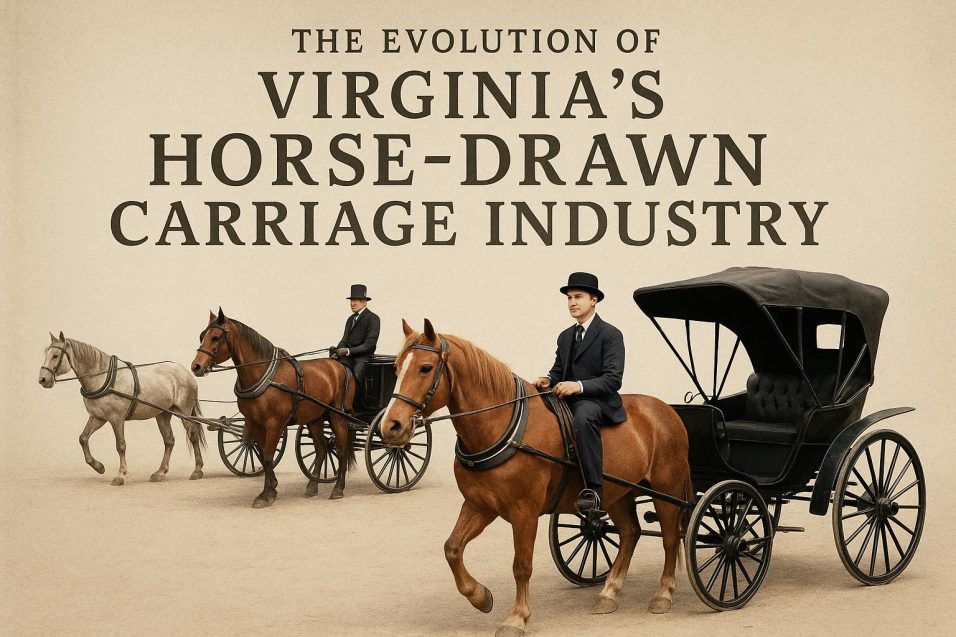
The Genesis of Horse-Drawn Carriages in Virginia
The history of horse-drawn carriages in Virginia is intertwined with the broader narrative of transportation in the United States. In the early colonial period, carriages became pivotal for both personal and commercial transportation. As the English colonial economy grew, so did the need for reliable and efficient modes of transport. The first horse-drawn vehicles catered to the elite, gradually transitioning to serve a wider public as the colony expanded.
The Initial Adaptation and Use
In the earliest days of the colony, transportation options were limited. Walking on foot and utilizing simple carts were common among ordinary settlers. However, the elite, who were keen on demonstrating their wealth and social status, soon imported horse-drawn carriages from England. These early carriages were primarily ostentatious, decorated with lavish materials and intricate designs that signified the owner’s wealth and social standing more than anything else.
As these vehicles began to take root in Virginian society, local craftsmen started to emerge, creating carriages that were suitable for the unique challenges of the Virginian terrain. The adaptation of European designs led to innovations that would make these vehicles more practical and useful for everyday transport.
18th Century Expansion and Innovation
During the 18th century, the demand for carriages increased, leading to significant advancements. Local craftsmen began to build more specialized vehicles, adapting European designs to suit Virginia’s unique geography and climate. The production of carriages in Virginia involved a variety of craftsmen, including blacksmiths, wheelwrights, and upholsterers, each contributing to the finished product.
Interplay of Craftsmanship and Resources
The industry benefited from Virginia’s rich natural resources. The abundance of timber provided materials for constructing the carriages’ frameworks, while local iron deposits supported the manufacture of durable components. The craftsmen not only lent their skills to the art of carriage making but also innovated new techniques. Blacksmiths developed more durable metal fittings; wheelwrights refined wheel designs to enhance stability and comfort; upholsterers introduced elegant and comfortable interiors that would appeal to Virginia’s growing affluent class.
These collective efforts culminated in a regional style of carriage that was uniquely Virginian, distinguishing these vehicles from their European ancestors. The evolving designs included adaptations such as the incorporation of higher carriage suspensions better suited for traversing the rugged, often muddy roadways prevalent in the area.
The Role of Horse-Drawn Carriages in Society
Horse-drawn carriages came to symbolize more than just transportation; they were a status symbol and an essential part of societal infrastructure. In urban areas, they linked residents to new business opportunities and social events, while in rural areas, they facilitated trade and travel between distant communities.
Economic and Social Impact
As the use of horse-drawn carriages spread, they played a pivotal role in shaping the economic structure of Virginia. For the elite, carriages facilitated the management of expansive plantations, enabling quick and relatively comfortable travel between primary residences and outlying agricultural operations. This mobility enabled plantation owners to oversee the efficient production and distribution of crops, a cornerstone of Virginia’s economy during this era.
In addition to their economic utility, carriages became central to the social fabric of the society. Social gatherings, political affairs, and even courtships often depended on carriage accessibility. Visiting and socializing in distant estates was made feasible, which fostered a close-knit community among Virginia’s influential families.
19th Century: Rise and Challenges
The 19th century marked the height of Virginia’s carriage industry, coinciding with industrial advancements and an expanding transportation network. The industry’s growth, however, was not without challenges. Fluctuations in economic conditions, such as the Panic of 1837, and the onset of the Civil War, caused disruptions that affected production and demand.
Technological Advancements in Carriage Manufacturing
Despite these challenges, technological innovations persisted. The use of suspension systems and improved wheel designs made rides more comfortable and efficient, ushering in an era of refinement that characterized the period. Enhanced durability ensured longer-lasting vehicles, and new production techniques allowed for more detail and ornamentation than ever before, strengthening the status symbol aspect of luxury carriages.
However, the socio-political turbulence of the era, notably the Civil War, also spurred a scramble for resources and shifts in labor paradigms. Many craftsmen were drawn into war efforts, and material shortages impacted production capabilities. Yet, the resilience of the industry is notable for its capacity to adapt despite these adversities.
Transition to Modern Modes of Transport
Towards the late 19th and early 20th centuries, the advent of mechanized vehicles signaled the decline of the horse-drawn carriage industry. Innovations in automotive technology swiftly took precedence, leading to the gradual displacement of carriages from Virginia’s roads. The flexibility and speed offered by automobiles rendered traditional carriages less practical for daily use.
The Shift in Transportation Paradigms
The transition was influenced by the burgeoning industrialization and the increased pace of life it brought about. With the development of railroads and the subsequent rise of the automobile, the once prominent horse-drawn carriages became less central to the logistical frameworks that supported Virginia’s economy. Initially, automobiles were luxury items themselves; in time, however, mass production techniques such as those pioneered by Henry Ford democratized automotive ownership, relegating horse-drawn carriages to historical relics for everyday transport.
Nonetheless, the legacy of the carriage industry remains a cherished element in Virginia’s cultural tapestry. It laid the groundwork for subsequent transportation advancements and continues to hold a place in ceremonial uses and tourism-related activities.
Preservation and Cultural Significance
Today, there are efforts to preserve the historical significance of horse-drawn carriages within Virginia. Museums and historical societies often showcase these vehicles, providing insight into the craftsmanship and lifestyle of previous centuries. For those interested in exploring this heritage further, The Virginia Historical Society offers resources and exhibits dedicated to the state’s transportation history. These educational endeavors ensure that the story of Virginia’s horse-drawn carriages is not forgotten.
In conclusion, while horse-drawn carriages no longer dominate the transportation landscape, their impact is indelibly etched into Virginia’s history. The evolution of this industry mirrors broader economic and technological changes, offering valuable insights into the region’s development and the adaptability required in times of transformation.